Why Mono-material Packaging is the Ultimate Solution for the 2026 Circular Economy?
By 2026, global sustainability mandates—specifically the EU’s Packaging and Packaging Waste Regulation (PPWR)—have shifted from voluntary goals to strict legal requirements. For manufacturers and exporters, the transition to Mono-material packaging is no longer just a "green" choice; it is a critical requirement for market access and cost control.
1. What is Mono-material Packaging?
Mono-material packaging refers to structures composed of a single type of polymer (e.g., 100% Polyethylene/PE or 100% Polypropylene/PP) or a single organic fiber (100% Paper).
Unlike traditional Multi-layer (Composite) materials, which bond different substances like PET, Aluminum, and PE together, mono-materials are designed for the "Circular Economy." They can be processed by standard recycling facilities without the need for expensive chemical separation.
2. Mono-material vs. Multi-layer: Technical Comparison
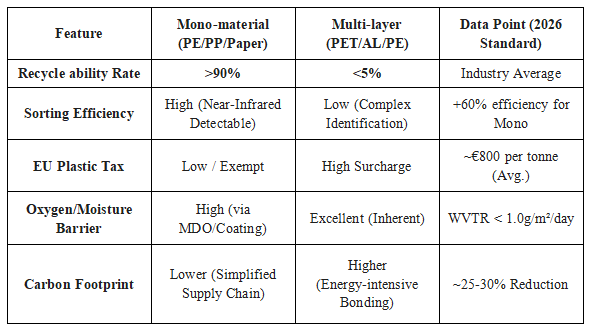
The following table outlines the performance and economic data as of 2026:
3. The 2026 Regulatory Landscape
As of 2026, international trade involves "Ecomodulation" fees. Packaging that is difficult to recycle (Multi-layer) incurs higher Extended Producer Responsibility (EPR) fees. Transitioning to Mono-PE or Mono-PP allows brands to:
Avoid High Taxes: Reduce "Non-recycled Plastic" levies in the EU and UK.
Improve Brand Equity: Use "100% Recyclable" certifications that resonate with global consumers.
Simplify Inventory: Sourcing a single polymer type reduces supply chain complexity.
·
4. Optimizing Production: The Role of Tape Application and Labeling
The shift to mono-materials requires precision in the "Finishing" stage of packaging. As a leader in packaging machinery, DAAP International provides the technology necessary to handle these new substrates without compromising speed or quality.
A. Automatic Tape Application on Mono-Substrates
Transitioning to 100% paper-based or mono-plastic shipping boxes requires efficient sealing.·
Precision Bonding: Our Automatic Tape Applicators apply double-sided tape to materials including paper, PVC, and wood. Unlike traditional glues that might contaminate the recycling stream, specific pressure-sensitive tapes (PSA) used in our machines can be designed to be "recycling-compatible."
Versatility: Whether you are applying tape to a flat cardboard folder or a specialized PVC display, the cold-application process of our machinery ensures the structural integrity of mono-polymers remains intact.
B. Smart Labeling for Circularity
In 2026, every package must carry a digital identity (QR codes or GS1 Digital Links) for recycling instructions.
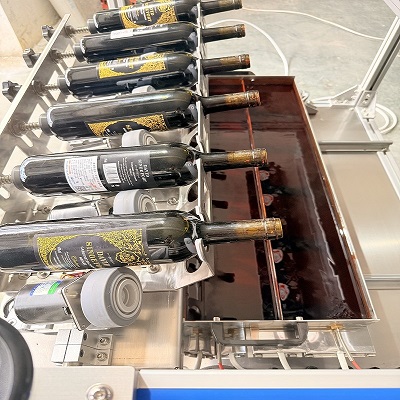
Label Compatibility: To ensure a package is "Mono-material," the label must match the container (e.g., PE label on a PE bottle). Our Automatic Labeling Machines provide high-speed, high-accuracy placement, ensuring that the QR codes used for "Digital Product Passports" are perfectly scannable every time.
·
5. Conclusion
Mono-material packaging is the cornerstone of the 2026 packaging industry. By eliminating the "Multi-layer" problem, companies reduce their tax burden and meet global compliance standards.
To successfully transition, manufacturers must pair these sustainable materials with high-performance downstream equipment. DAAP International (Yantai) Co., Ltd. provides the Automatic Tape Applicators and Labeling Solutions needed to turn sustainable design into high-speed production reality.
SEO Metadata for Your Website:
Focus Keyword: Mono-material packaging 2026
Secondary Keywords: Sustainable packaging trends, automatic tape applicator, industrial labeling machine, recyclable packaging design, PPWR compliance.
Meta Description: Why is mono-material packaging the ultimate solution for 2026? Compare mono vs. multi-layer materials and learn how DAAP's tape applicators and labeling machines support the circular economy.