How to Choose an Automatic Paper Counting Machine for Various Weights: From 30g to 210g
 In the fast-paced world of commercial printing, packaging, and paper processing, efficiency and accuracy are not just goals—they are absolute necessities. Whether you are running a large-scale printing facility or a specialized bindery, you know that paper comes in an incredibly wide variety of thicknesses and weights. From the ultra-thin sheets used for pharmaceutical leaflets to the heavy cardstock required for premium packaging, your equipment must keep up.
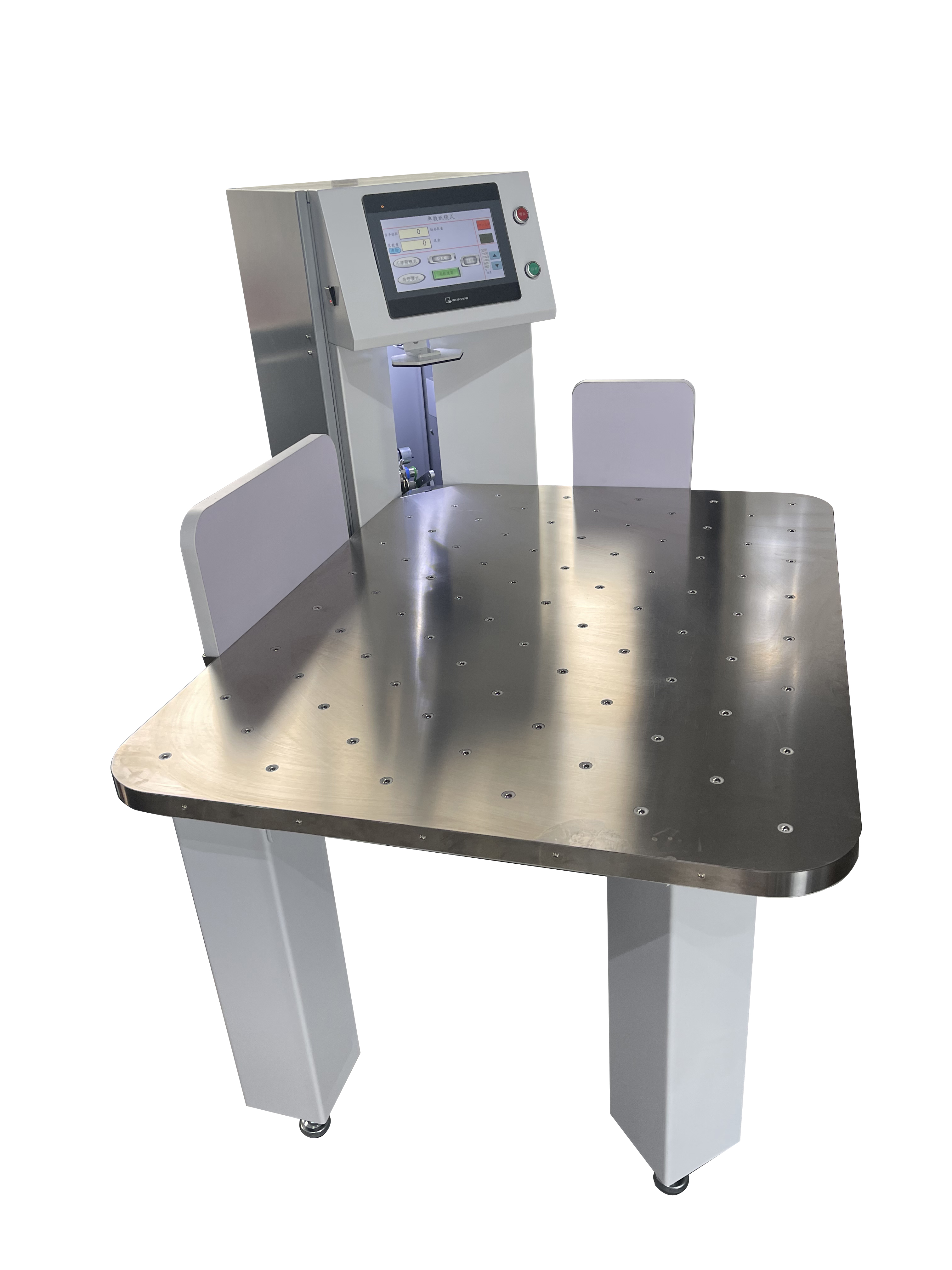
One of the most critical pieces of equipment in your workflow is the automatic paper counting machine. But how do you choose the right one? The secret lies in extreme versatility. In this comprehensive guide, we will explore why a paper counter capable of handling a broad spectrum of weights—specifically from 30g to 210g—is the ultimate game-changer for your production line, and how it perfectly handles standard requirements like 75g paper.

Understanding the Challenges of Paper Weight (GSM)
In the paper industry, weight is typically measured in GSM (Grams per Square Meter). The GSM determines the paper's thickness, rigidity, and how it behaves when processed by machinery. Different weights present entirely different mechanical challenges for a paper counting machine:
 Standard Weights (e.g., 70g - 90g): This is your everyday copy paper, letterhead, and standard book pages. The 75g paper is the most common benchmark in the industry. While most machines can handle this, true industrial machines process standard weights with lightning speed and zero errors.
Lightweight Paper (30g - 60g): These include carbonless copy paper (NCR), bible paper, pharmaceutical inserts, and receipts. Thin paper is notoriously difficult to process because it is prone to curling, tearing, static cling, and double-feeding.
Heavyweight Paper (150g - 210g+): This category covers greeting cards, thick brochures, file folders, and packaging boxes. Heavy paper is stiff and requires robust mechanical strength and high-power suction to separate and count the sheets without jamming.
If your current paper counter can only handle standard weights, you are limiting your business's potential.

The 30g Challenge: Mastering Ultra-Thin Paper
Counting 30g paper requires a delicate touch combined with highly precise engineering. When an automatic paper counting machine is not optimized for lightweight paper, the vacuum suction can easily pull multiple sheets at once, resulting in inaccurate counts. Worse, aggressive mechanical fingers can tear the fragile edges, leading to costly waste.
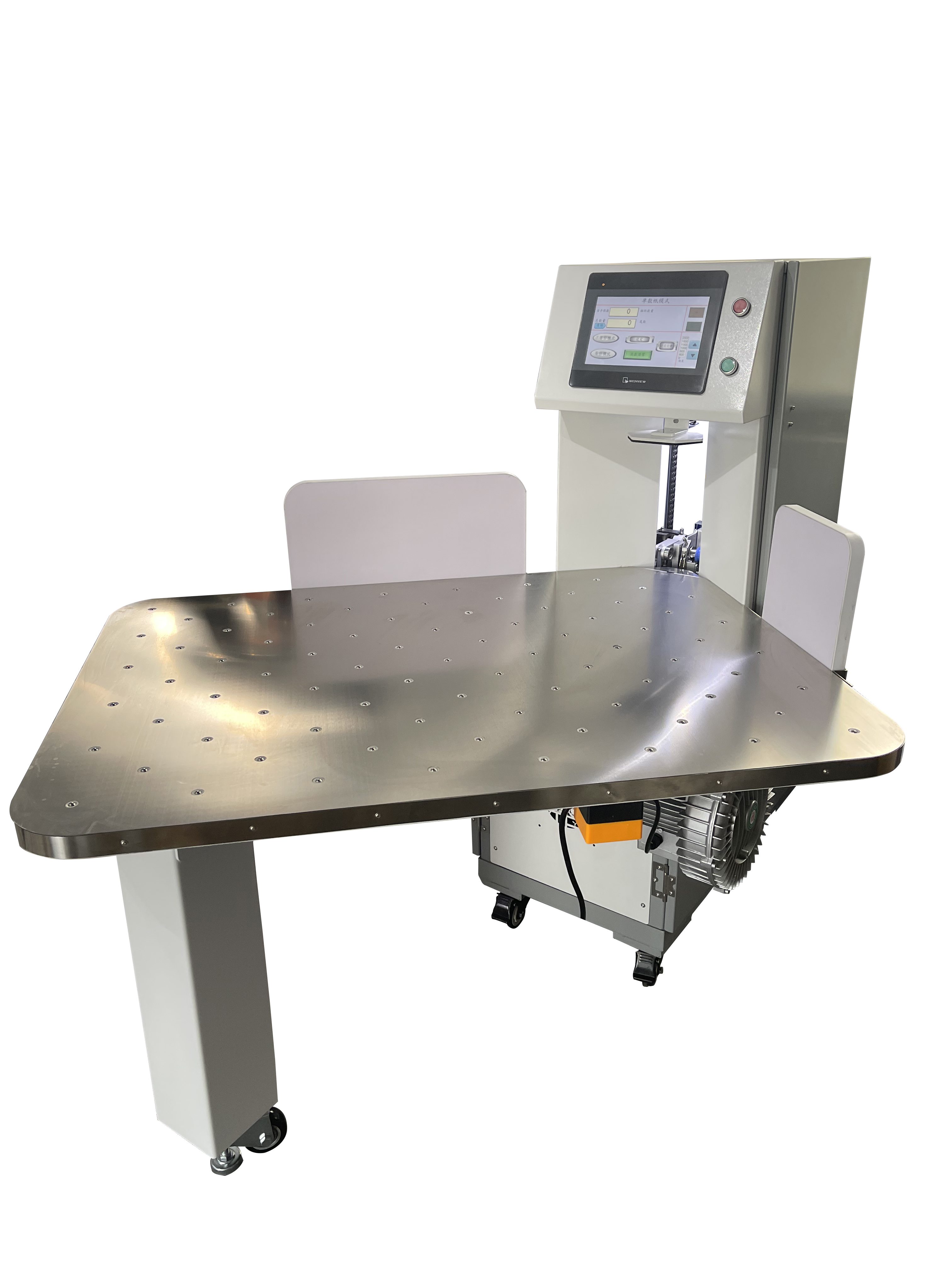
A premium 30g to 210g paper counter utilizes advanced aerodynamics and sensitive optical or mechanical sensors. By creating a perfect cushion of air between the sheets, the machine effortlessly separates 30g paper, allowing the counting head to glide through smoothly. If your business handles receipts, tickets, or ultra-thin manuals, investing in a machine with a proven 30g capability will eliminate bottlenecks and drastically reduce paper waste.
The 75g Benchmark: Perfection in Standard Processing
When international buyers look for reliable paper counting equipment, they often test it against standard paper weights first. A client recently approached us stating their primary need was a paper counter for 75g paper.
For a high-quality automatic paper counting machine, 75g is the perfect middle ground. Because an advanced machine is engineered to handle the extremes (30g and 210g), processing standard 75g letter-size paper becomes an effortless, high-speed operation. The machine can operate at maximum capacity—often counting thousands of sheets per minute—with a 100% accuracy rate. It provides the stability and reliability that commercial printers need for their daily, high-volume production runs, ensuring that every batch is perfectly quantified before moving to the cutting, folding, or binding stages.
The 210g Challenge: Power and Precision for Heavy Stock
On the opposite end of the spectrum, counting heavy cardstock up to 210g demands sheer mechanical power. Thick paper does not bend easily, meaning the separation process requires stronger air blasts and heavy-duty counting pins.
Inferior machines will stall, jam, or skip sheets when confronted with 210g cardstock. However, a highly compatible industrial paper counter features adjustable vacuum pumps and customizable mechanical settings. This allows operators to easily dial in the exact pressure needed to separate stiff packaging boards or premium covers. By safely handling 210g materials, you can confidently accept high-margin packaging and premium print jobs without worrying about manual counting errors.
Why a "30g to 210g" Range is the Ultimate Sweet Spot
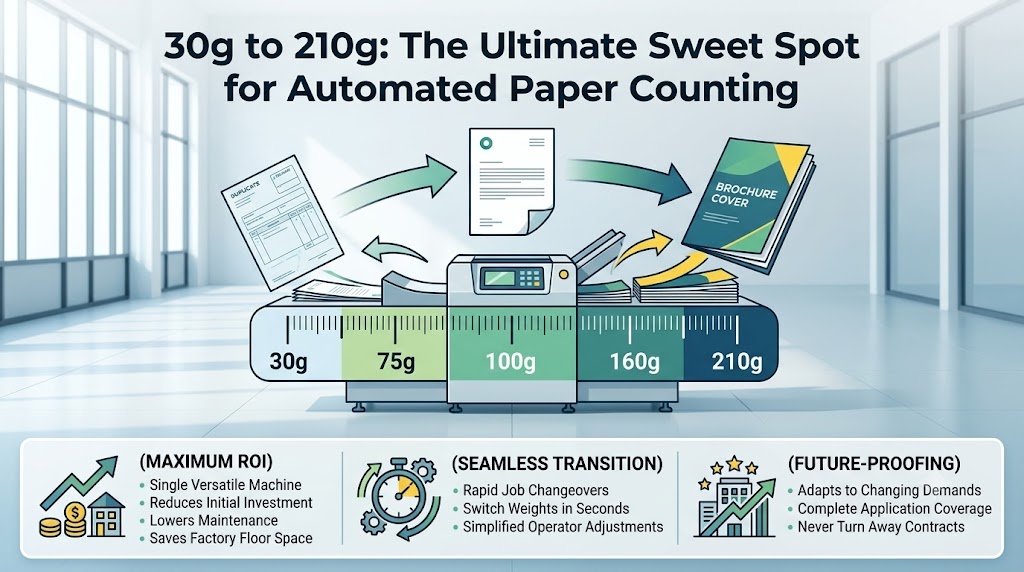
Purchasing machinery is a significant capital investment. You do not want to buy one machine for lightweight paper and another for heavy cardstock. Choosing a machine with a proven 30g to 210g range offers unparalleled advantages:
1. Maximum Return on Investment (ROI)
By covering almost every commercial paper weight your factory will encounter, a single versatile machine handles the workload of two or three specialized machines. This reduces your initial investment, lowers maintenance costs, and saves valuable factory floor space.
2. Seamless Transition Between Jobs
Modern commercial printing requires flexibility. In a single shift, your operators might switch from processing 75g corporate letterheads to 30g duplicate forms, and finally to 210g brochure covers. A broad-range automatic paper counting machine allows for rapid changeovers. With simple, intuitive adjustments, operators can switch between extreme paper weights in seconds, keeping your production line moving.
3. Future-Proofing Your Business
Customer demands change. Even if your current contracts only require counting standard 75g paper, future clients may demand specialized packaging or lightweight manuals. Owning equipment that spans from 30g to 210g ensures that you never have to turn away a lucrative contract due to equipment limitations.

Key Features of a Premium Multi-Weight Paper Counter
When browsing for an automatic paper counting machine for your facility, look for these critical features to ensure it can truly handle the 30g to 210g range:
Adjustable Air Flotation Technology: The ability to control the volume and pressure of the air used to separate the sheets is vital for switching between heavy and thin paper.
High-Precision Counting Heads: The machine must feature durable, precision-engineered counting head that will not damage thin paper but are robust enough to handle thick cardstock.
Intuitive Control Panel (HMI): A user-friendly touchscreen allows operators to easily input the paper GSM and instantly adjust the machine's parameters for optimal performance.
High quality Vacuum Pump: Essential for providing the reliable suction needed to pull heavy 210g sheets consistently.
Self-Diagnostic Systems: Smart sensors that automatically detect paper jams, double-feeds, or mechanical errors, preventing machine damage and material waste.

Conclusion
Accuracy in paper counting directly translates to profitability. Whether you are strictly processing standard 75g paper or dealing with a complex mix of 30g ultra-thin sheets and 210g heavy cardstock, having the right equipment is non-negotiable. An automatic paper counting machine designed to handle this extensive range is not just a tool; it is a strategic asset that enhances productivity, ensures quality control, and boosts your bottom line.
Ready to upgrade your paper processing capabilities? As a direct manufacturer of professional industrial machinery, we offer high-speed, remarkably accurate paper counting machines built to conquer any paper weight challenge. Our machines offer unbeatable cost-effectiveness and proven reliability on the factory floor.
Contect us to learn more about our advanced automatic paper counting machines and discover how we can tailor a perfect solution for your specific production needs!

💡 Frequently Asked Questions
Q1: Can this machine reliably process both 30g lightweight paper and 210g heavy cardstock? Is the changeover process complicated?
A: Absolutely. Our premium paper counters are equipped with an intelligent, adjustable vacuum suction and air-blowing system. For 30g lightweight paper (such as carbonless or Bible paper), the system automatically reduces air pressure to prevent curling or tearing. For 210g heavy cardstock, the suction power is increased.Zero mechanical hassle: You simply select the paper weight preset on the HMI touch screen. There is no need to manually swap out the counting heads, bringing the changeover time down to less than a minute.
Q2: Will the counting head leave scratches, scuffs, or indentations on high-gloss coated or laminated paper?
A: No, your premium prints are perfectly safe. For sensitive surfaces, our machines utilize a non-contact air-flotation table and customized scratch-free counting blades. The suction nozzle interacts with the paper edges primarily via airflow, ensuring zero damage to the paper surface even at high speeds. This provides perfect protection for heavy solid-color prints, UV-coated, and laminated sheets.
Q3: How does the machine maintain 100% counting accuracy if the sheets have static cling or heavy ink coverage?
A: Static and slight sticking are common in pressrooms, which is why our machine features an advanced Air-Blowing Separation System. Before counting begins, powerful side-air jets fluff and separate the sheets like an air cushion. Combined with high-sensitivity sensors and a mechanical double-sheet detector, the machine will instantly trigger an alarm and auto-stop if it encounters completely inseparable sheets—guaranteeing 100% accuracy for your final delivery.