How to Choose a CNC Cutting Machine? A Complete Guide from Principles, Types to Common Pitfalls
What is a CNC Cutting Machine? How Does It Work?
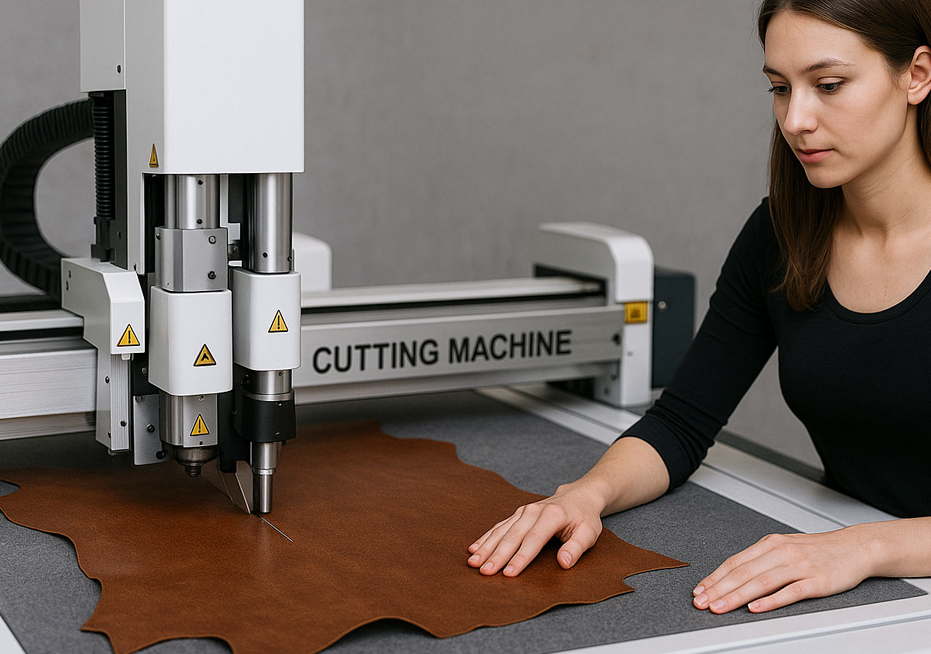
A CNC cutting machine is an automated device that uses computer numerical control to operate mechanical axes and precisely cut materials according to programmed instructions (usually G-code).
Compared with traditional manual cutting, CNC cutting machines offer several major advantages:
High precision: Typical accuracy can be controlled within millimeters or even microns (within $\pm 0.05\text{mm}$).
High repeatability: As long as the program remains unchanged, the quality of 10,000 pieces can be identical.
Complex processing capability: Easily achieves complex 3D curves and hollow patterns that are difficult or impossible to do manually.
Four Main Types of CNC Cutting Machines (With Pros & Cons)
Based on different cutting methods/tools, CNC cutting machines can be divided into the following four categories. Understanding their differences is the first step in selection:
1. CNC Fiber Laser Cutting Machine
Working principle:
Uses a high-power laser beam to scan the material surface, rapidly melting or vaporizing it, while high-pressure gas blows away the slag.
Best materials:
Carbon steel, stainless steel, aluminum alloy, brass, and other metals.
Advantages:
Extremely fast cutting speed
Highest precision
Narrow kerf (cutting seam)
Small heat-affected zone
Disadvantages:
High equipment and maintenance cost
Not suitable for extremely thick plates
CNC Plasma Cutting Machine
Working principle:
Uses high-temperature plasma arc to melt metal at the cutting area.
Best materials:
Medium-thickness metal plates (such as medium carbon steel and stainless steel).
Advantages:
Can cut thick materials (tens of millimeters)
Lower cost than laser cutting
Fast cutting speed
Disadvantages:
Rougher cutting edge with slag
Not suitable for precision small parts
CNC Router (Woodworking Cutting/Engraving Machine)
Working principle:
Uses high-speed rotating cutting tools (milling cutters) to physically cut materials.
Best materials:
Wood, MDF, acrylic, PVC, soft metals such as aluminum and copper.
Advantages:
Affordable price
Wide application range
Can cut and perform 3D engraving
Disadvantages:
Produces dust and noise
Cannot cut high-hardness metals
CNC Waterjet Cutting Machine
Working principle:
Uses ultra-high-pressure water (with abrasive sand added) for cold cutting.
Best materials:
Stone, ceramics, glass, ultra-thick steel plates, composite materials.
Advantages:
No thermal deformation
Can cut almost any material
Smooth cutting edges
Disadvantages:
Slow cutting speed
High consumable cost (water and sand)
Large machine size
Three Major Pitfalls to Avoid When Buying a CNC Cutting Machine
Many buyers purchase CNC machines for the first time based only on price, and end up with an “expensive idle machine.” Pay attention to the following hidden factors:
1. Ignoring “Effective Working Travel”
Many manufacturers only list machine size, not actual working travel. You must confirm the effective X/Y/Z axis travel to ensure your raw materials (such as full-size boards or steel plates) fit into the processing area.
Controller System and Software Compatibility
The “brain” determines the machine’s performance ceiling. Common systems include Weihong, LNC, Syntec, or entry-level open-source systems like Mach3/GRBL.
Make sure the system supports your design software such as:
AutoCAD, SolidWorks, ArtCAM, Vectric Aspire, etc.
After-Sales Service and Technical Support (Critical!)
CNC machines are high-intensity industrial equipment. Issues like guide rail wear, spindle failure, or laser degradation can cause downtime.
Before purchasing, confirm:
Warranty terms
Remote technical support availability
Supply of consumables (nozzles, lenses, cutting tools)
Conclusion: How to Take the First Step?
There is no “best” CNC cutting machine—only the most suitable one.
If you are an individual maker or small advertising shop, a cost-effective CNC Router is an ideal starting point.
If you are in metal fabrication and require high efficiency, a fiber laser cutting machine is a strong investment that can quickly pay back its cost.